ITEM 41977
Japanese Theatrical Mask
Japan, Edo period (1603–1868)
Carved wood with polychrome pigments
8 ½ x 5 5/8 x 3 in
Price on Request
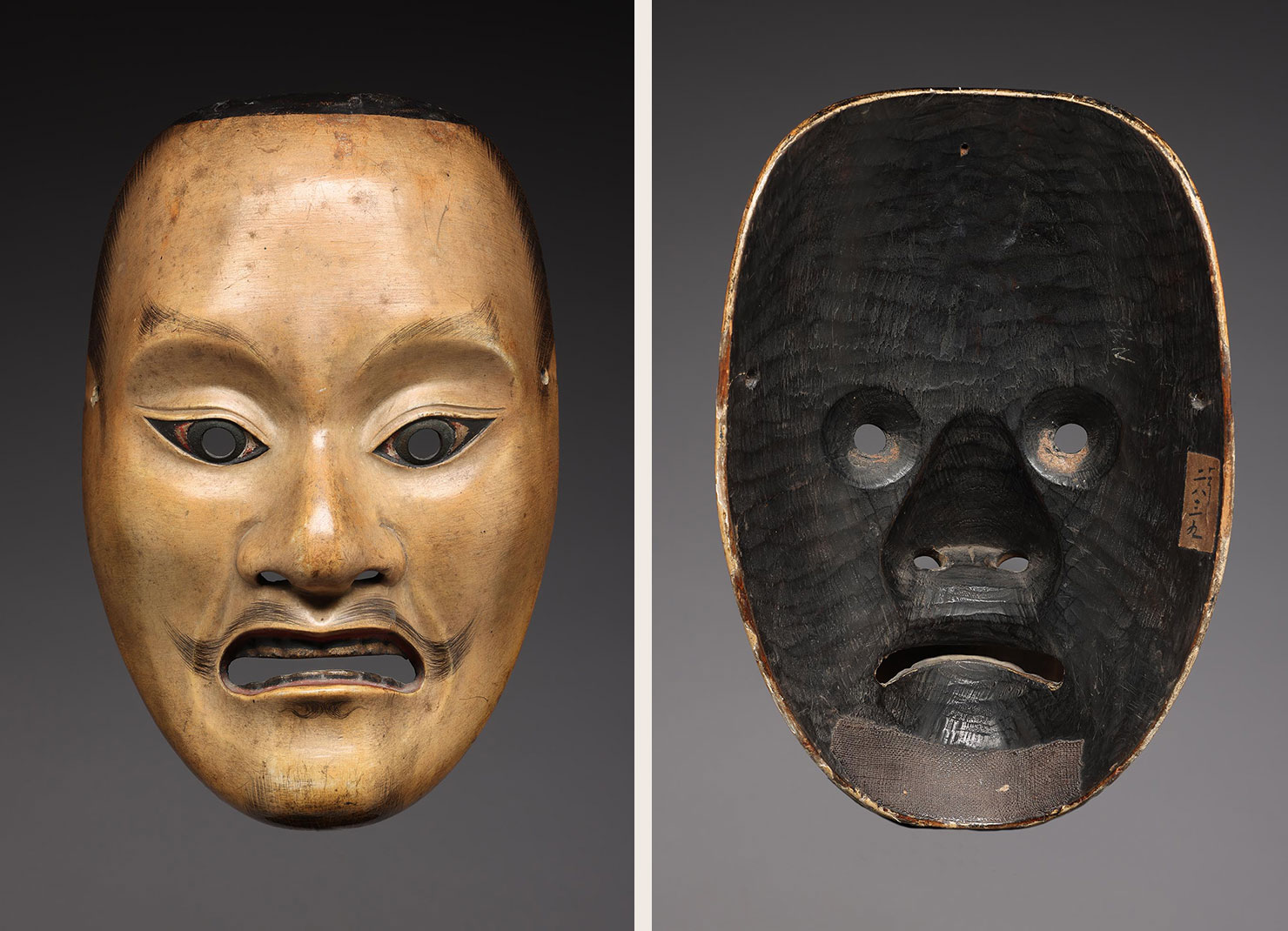
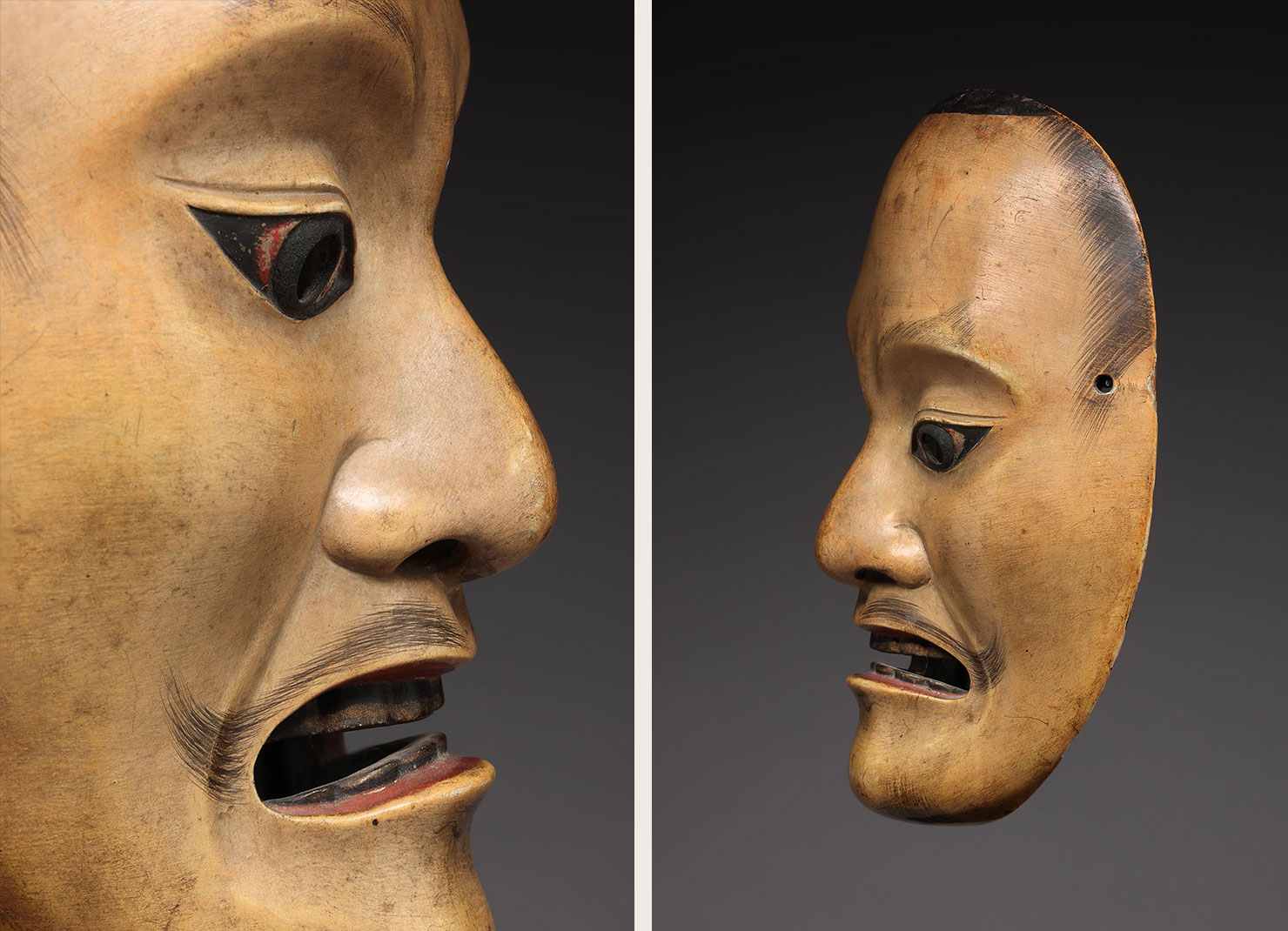
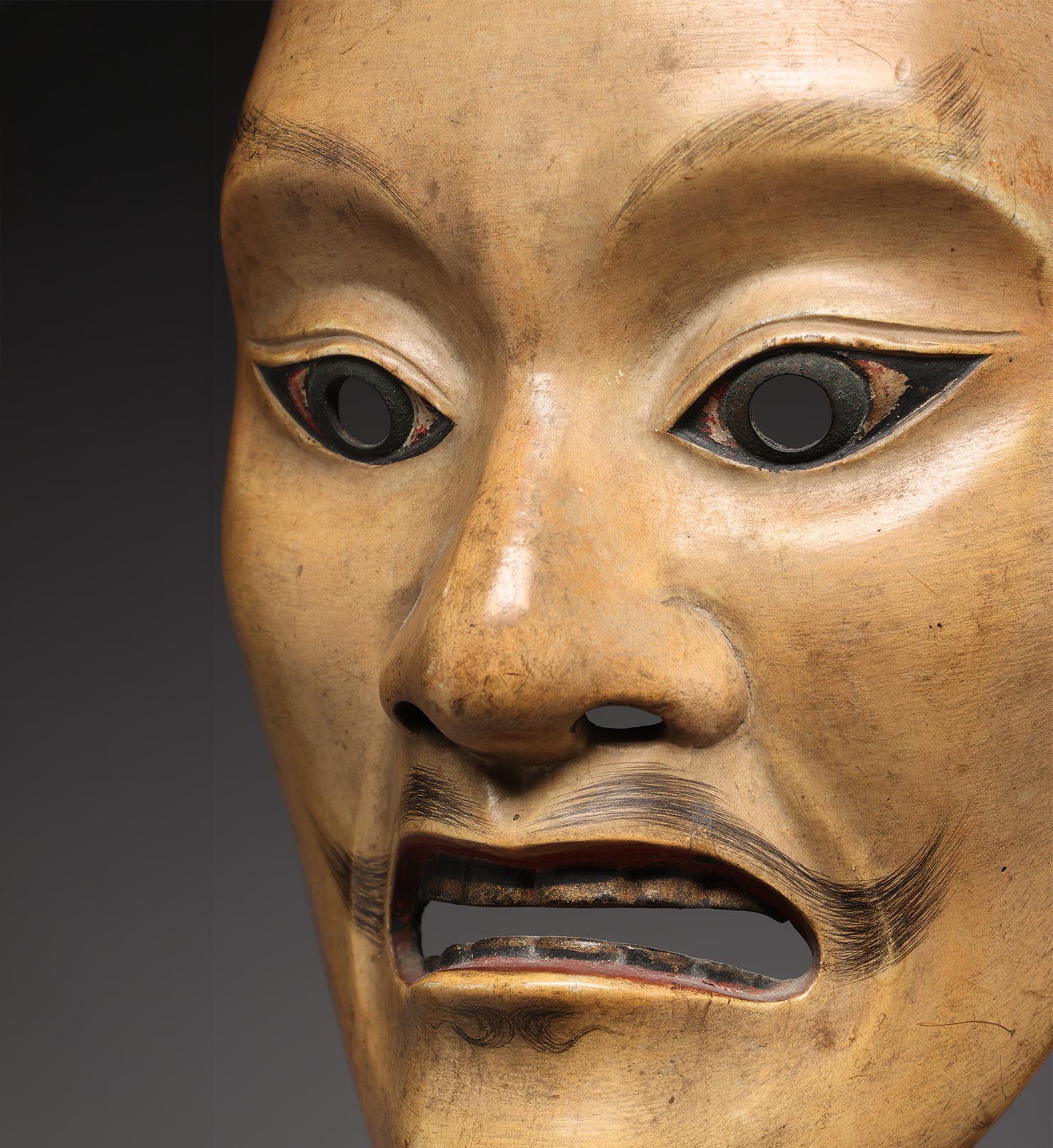
“This intriguing mask resembles closely a Mikazuki, an austere but benevolent god, in terms of the overall conformation of the face, coloration, and individual features–with one prominent and important exception: the slant of the eyes. This pronounced slant of the eyes is a prime characteristic of Kagura masks and older ritual masks. On the other hand, it clashes with the aesthetics of Noh.”
– Stephen Marvin
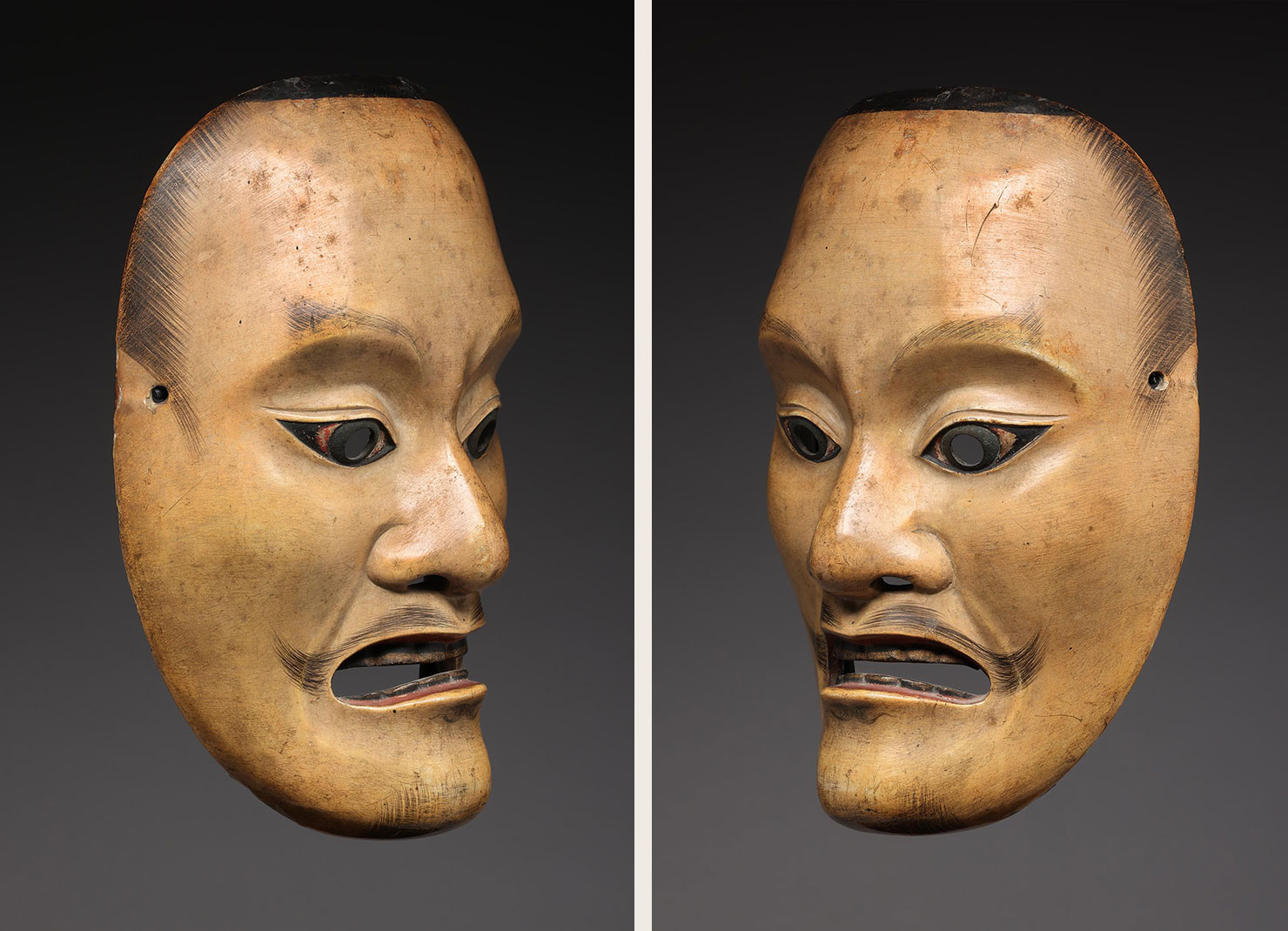
The mask is masterfully carved from wood and finished with a warm, honey-toned surface accented by finely painted facial details. The face is characterized by high arched eyebrows, elongated almond-shaped eyes outlined in black and red pigment, and a slightly open mouth revealing darkened teeth. A delicately painted mustache curves upward from the corners of the mouth, while a small tuft of hair adorns the chin, emphasizing the figure’s mature male identity.
The restrained yet powerful modeling of the features creates an expression of inner tension and emotional intensity. Depending on the angle of performance lighting, the mask could convey anger, anguish, determination, or supernatural unease—a hallmark of the sophisticated emotional ambiguity prized in Noh theater. Small perforations at the sides were used to secure the mask to the actor’s head with cords.
The interior surface is coated in a dark black lacquer or pigment, contrasting with the lighter exterior, while the edges reveal the natural wood beneath through areas of wear. The reverse is carved exactly like that of a Noh mask, and a reinforcing hemp patch and paper inventory label of this style are rarely seen on Kagura masks. Either a very successful Kagura troupe commissioned this (expensive) mask from a professional Noh-mask artist or the mask was indeed made for the Noh stage with this nonstandard eye configuration. A rare find indeed!